+86-15625700408
- All
- Product Name
- Product Keyword
- Product Model
- Product Summary
- Product Description
- Multi Field Search

Views: 0 Author: Site Editor Publish Time: 2025-12-09 Origin: Site


According to the "Global Medical Lithium Batteries Market Report 2024-2030" by Grand View Research, the global market size of medical lithium batteries has exceeded 8.5 billion US dollars in 2024, with a compound annual growth rate of 12%-15%. The core factors driving growth include the demand for portable medical devices (such as insulin pumps, handheld ultrasound machines) driven by an aging population, the widespread use of implantable devices (such as cardiac pacemakers), and the upgrade of emergency equipment (such as AED defibrillators). However, the uniqueness of medical scenarios (directly related to the safety of patients' lives and with complex and variable environments) determines that the battery safety requirements for medical equipment are far higher than those of consumer products. Therefore, a "compliance throughout the entire life cycle + customized scene adaptation" approach is needed to build a safety barrier. The following will analyze the strict safety requirements for medical device lithium batteries from the dimensions of core market certification, transportation safety, performance verification, scene requirements, and enterprise practices.
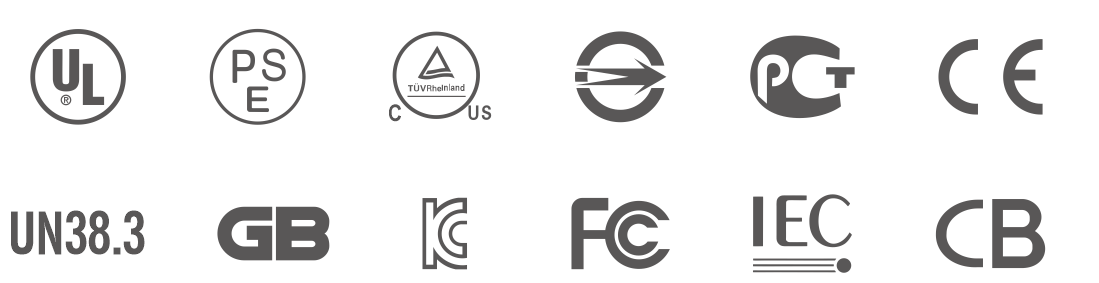
Certification requirements for medical device batteries in major markets
Medical device batteries must obtain specific certifications for the target markets. The compliance requirements in key regions (the United States, the European Union, and China) are clear and differentiated, and they are the key thresholds for B-end customers' products to go global:
(1) US market (FDA regulation)
Core standards
Safety requirements: Must comply with IEC 62133 (safety of secondary batteries), UL 2054 (safety of battery packs), IEC 60601-1 (general safety of medical electrical equipment), and ISO 13485 (quality management system for medical devices).
Special requirements: The battery must be biocompatible (in accordance with ISO 10993-1); it must be protected against counterfeiting through identity authentication (such as SHA-1 encoding); each battery must be serialized and traceable (supporting UDI coding system).
Certification process
The battery must be submitted along with the medical device for FDA registration, and complete test reports (including safety, EMC, and biocompatibility) must be provided. For some high-risk devices (such as implantable pacemaker batteries), additional clinical evaluation data must also be submitted.
(2) EU Market (MDR Regulation)
Core Standards
Basic Requirements: Must comply with the "Basic Safety and Performance Requirements" in Annex I of the EU Medical Devices Regulation (MDR), including electrical safety, mechanical safety, and biocompatibility.
System requirements: The design and manufacture of batteries must be based on the quality management system certified by ISO 13485, ensuring that the production process is traceable and risks are controllable.
Test requirements: Must pass IEC 62133 (additional requirements for medical scenarios: biocompatibility, safety for use near patients), IEC 60601-1 (specific safety requirements for medical electrical equipment), and submit a complete test report.
Certification mark
After obtaining the certification, a CE mark must be affixed before the product can be sold in the EU member states; high-risk devices (such as implanted batteries) need to be reviewed by a notified body, while low-risk auxiliary batteries can comply through a "self-declaration".
3. Chinese Market (NMPA Regulation)
Core Standards
General Safety: GB 9706.1-2020 "Medical Electrical Equipment - Part 1: General Requirements for Basic Safety and Basic Performance", equivalent to IEC 60601-1:2012, covering electrical, mechanical, environmental, EMC, etc. requirements (for example, in the case of Jiangsu Provincial Medical Device Inspection Institute in 2023, a handheld ultrasound device was judged不合格 due to the absence of fireproof materials for isolating the dry battery compartment, which did not meet this standard).
Battery-specific standards: Lithium primary batteries must comply with GB 8897.4-2008 "Primary Batteries - Part 4: Safety Requirements for Lithium Batteries"; Lithium rechargeable batteries must comply with GB/T 28164-2011 (which will be equivalent to IEC 62133-2:2017), and the charging voltage, current, and temperature effects need to be evaluated under normal / single fault conditions.
Compulsory Certification: As of August 1, 2023, lithium-ion batteries for portable electronic devices (including batteries for medical portable equipment) will be subject to CCC compulsory certification; after August 1, 2024, batteries without a CCC certificate and without the certification mark shall not be manufactured, sold, or imported.
Certification process
The battery must be submitted to the NMPA for registration along with the medical device. Provide GB standard test reports, ISO 13485 system certification, and for high-risk devices, clinical validation must also be conducted.
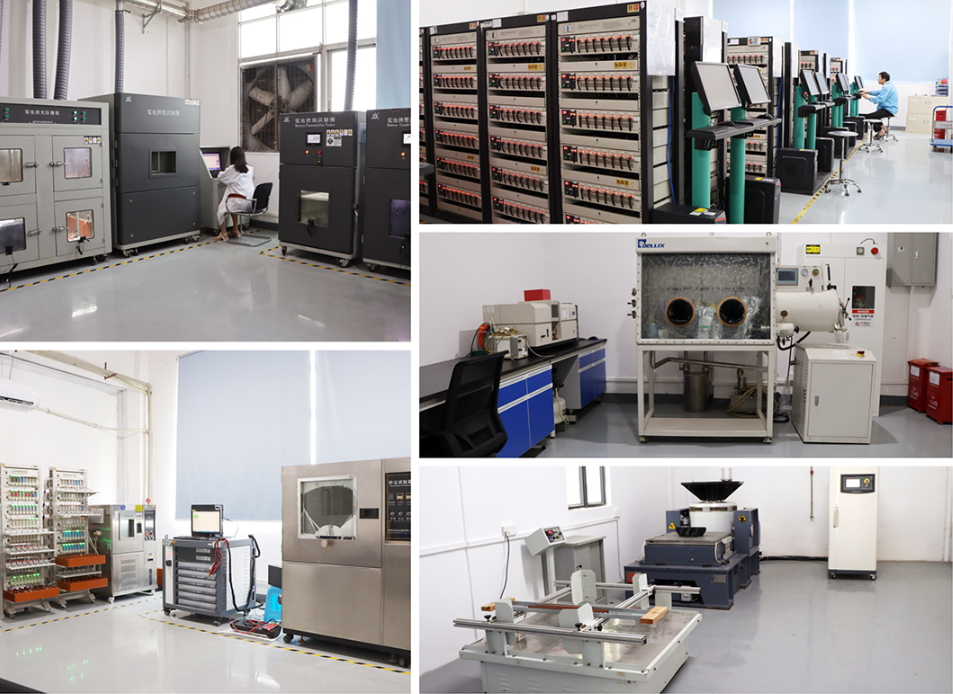
Medical lithium battery transportation safety certification
Medical lithium batteries, due to their high energy density, are prone to safety risks during transportation due to collisions and temperature fluctuations. Therefore, they require special transportation certification:
The sole mandatory standard: UN 38.3 (Section 38.3 of the United Nations' "Recommendations on the Transport of Dangerous Goods"), all medical lithium batteries (regardless of their capacity) must pass this standard test before they can be transported by air, land, or sea.
2. Core content of the test:
Highly simulated: Placed in a 11.6 kPa low-pressure environment for 6 hours, there was no leakage or deformation.
Temperature cycling: -40℃ (2 hours) → 70℃ (2 hours), cycle 10 times, no cracking or fire.
Vibration test: Within the frequency range of 10 - 2000Hz, a 5g acceleration vibration was applied for 2 hours (in each direction), without any structural damage.
Impact test: A 150J energy impact was applied to the battery, with no leakage of electrolyte or explosion.
3. Certification Entity: The report must be issued by a third-party institution with UN 38.3 testing qualifications. During transportation, this report must be carried along with the goods. The customs and logistics parties will verify its compliance.
III. Performance and Reliability: Rigorous Testing under Extreme Conditions for Verification
The complexity of the medical scenario requires that the battery undergoes extreme condition tests to ensure stability across all scenarios. The core test indicators are verifiable and traceable:
Environmental adaptability
Temperature cycling: -40℃ to +85℃ for 50 cycles, capacity degradation should be ≤ 15%.
Hydrothermal aging: Placed in an environment of 40℃ and 95% RH for 168 hours, the insulation resistance must be ≥ 100 MΩ.
2. Mechanical Reliability
Drop test: Free fall from a height of 1 meter onto a concrete surface 26 times (in accordance with IEC 60068-2-32), with no cracking of the battery housing or leakage of the electrolyte.
Bottom impact: Simulates the collision scenario of a medical cart. A 30mm steel ball with 150J energy impacts the bottom of the battery, and the insulation resistance must be ≥ 10MΩ.
3. Electrochemical Performance
Cycle Life: Implantable device batteries must meet a minimum of 10,000 charge-discharge cycles (with a capacity retention rate of ≥70%). For example, if the battery of a cardiac pacemaker uses a lithium-iodine system, its lifespan can exceed 10 years.
Self-discharge rate: The monthly self-discharge should be ≤ 3% (at 25℃ storage temperature). Avoid the device from accidentally shutting down when in standby mode.

Special scenario adaptation: Customized safety standards for different medical devices
The differences in usage scenarios of various medical devices determine that batteries must meet customized safety requirements. The core scenario standards are clearly defined:
Implantable devices
Biocompatibility: Must pass ISO 10993-5 cytotoxicity test (cell survival rate ≥ 90%) and ISO 10993-12 test for heavy metal content in leachate (lead ≤ 0.1 μg/mL).
Long-term sealing performance: The titanium alloy shell is sealed using laser welding. The helium mass spectrometry leak detection rate should be ≤ 1×10⁻¹² Pa·m³/s to ensure no electrolyte leakage in the body environment.
2. Portable devices
Fast charging: For example, the battery of an insulin pump should support 3C fast charging (fully charged within 30 minutes to 80%), and undergo a short circuit test after multiple fast charging cycles (no fire occurs after 300 cycles).
User safety design: The battery compartment must be equipped with a reverse connection prevention clip, and the casing must be waterproof to IP67 standard (submerged in 1-meter-deep water for 30 minutes).
3. Emergency Equipment
Extreme temperature performance: The AED battery must maintain 90% capacity at -30℃ and pass the temperature shock test (5 cycles) from -40℃ to +70℃.
High-rate discharge: The defibrillator battery must provide a single discharge energy of ≥ 300J, and the voltage should not decrease by more than 5% after 5 consecutive discharges.
Enterprise Practice Case: Juzhu Lithium Battery - Expert in Medical Lithium Battery Safety and Compliance
Dongguan Juzhu Electronics Co., Ltd. is a national high-tech enterprise and a national "small giant" enterprise specializing in precision and innovation. It has been deeply engaged in lithium battery customization for 23 years, having served over 70 listed companies and completed more than 2,000 medical lithium battery production projects. Its medical batteries are compatible with various scenarios such as portable diagnostic equipment and defibrillators.
Compliance capability
Obtained ISO 13485 certification for the medical device quality management system. The entire series of medical batteries have obtained certifications such as CE, UL 2054, CCC, and UN 38.3. They are fully insured by Ping An Insurance of China (with an insurance coverage of 30 million yuan), directly meeting the regulatory requirements of China, the United States, and Europe.
2. Safety Protection
Establish a complete "cell - BMS - PACK - testing" protection chain - Select A-grade lithium iron phosphate cells (with a cycle life exceeding 2000 times); Customize medical-grade BMS (including 5 major protections such as overcharge/overdischarge/overcurrent/overtemperature, and supporting medical device communication protocols); The PACK adopts UL 94 V0 flame-retardant shell and IP67 waterproof design; Complete 90 tests (such as 50 cycles at -40℃ to 85℃ with a capacity retention rate of ≥80%) relying on 17 professional laboratories;
3. Customization Capability
Supports precise matching of voltage (3.7V - 72V) and capacity (500mAh - 20Ah)
Supports the all-material system of lithium iron phosphate/lithium cobalt oxide/triple-ion lithium batteries
Supports all types of packaging for cylindrical/rectangular/flexible cell modules
Supports communication protocols such as SMBUS/RS485/CAN, with precise power consumption display.
Customizable - Special requirements such as -40℃ low-temperature batteries, special-shaped batteries (such as L-shaped structures that fit the curved surface of the equipment), waterproof casings, etc.
4. For the Chinese market, its batteries comply with GB 9706.1-2020, offer 8-hour response time and 24-hour door-to-door service. Standard sample production takes 3-7 days, and the cost is only 70%-80% of that of imported brands, achieving a balance between compliance and cost-effectiveness.
VI. Conclusion.
The safety and certification of medical equipment batteries are the "lifeline" of the medical equipment industry. Their compliance must cover the entire life cycle of "design - production - transportation - use", and need to adapt to the specific requirements of different devices. For medical equipment manufacturers, choosing a supplier with full market certification capabilities, extreme testing verification strength, and customized services (such as Juchai Lithium Battery) can effectively avoid compliance risks and improve product reliability. In the future, with the implementation of GB/T 28164 being equivalent to IEC 62133-2:2017 and the deepening of the EU MDR regulations, the safety standards for medical batteries will further upgrade. The industry needs to build core competitiveness by "authoritative compliance + technological innovation".


