+86-15625700408
- All
- Product Name
- Product Keyword
- Product Model
- Product Summary
- Product Description
- Multi Field Search

Views: 0 Author: Site Editor Publish Time: 2026-05-15 Origin: Site


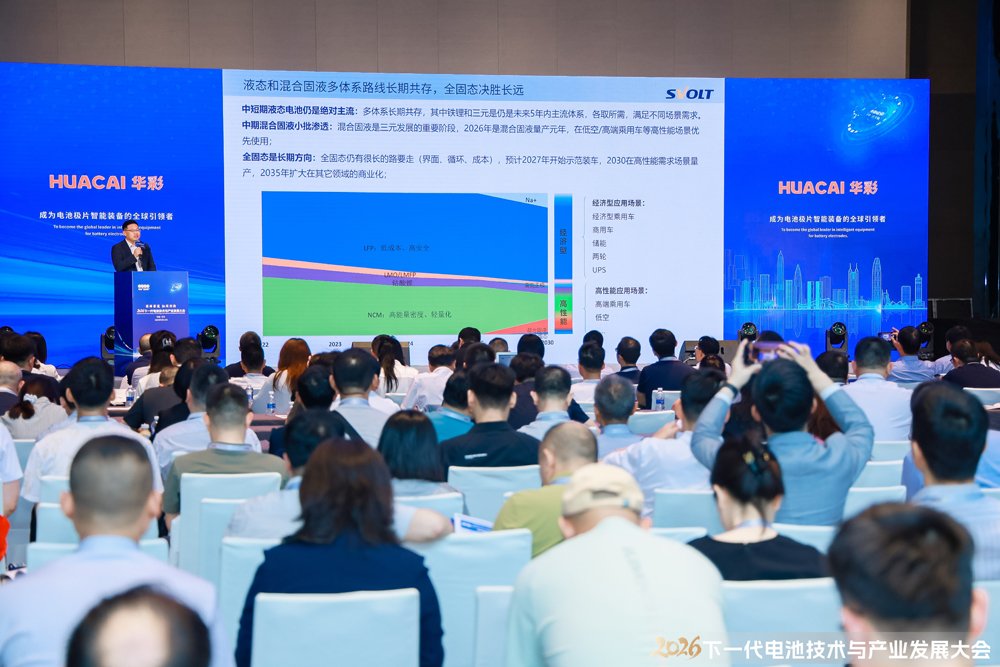
The 2026 Conference on Next-Generation Battery Technology and Industry Development
Battery Association - Battery Network May 12th News (Chen Yu, Zhang Qian, Guangdong, Shenzhen, Live Images and Text) On May 12th, the "2026 Next-Generation Battery Technology and Industry Development Conference" jointly organized by the ABEC Committee, the Zhongguancun New Battery Technology Innovation Alliance, and Battery Network was inaugurated in Shenzhen.
The conference brought together the top experts from the fields of research, education and industry worldwide. Focusing on the two cutting-edge tracks of solid-state batteries and sodium batteries, it deeply discussed the breakthroughs and industrialization paths of high energy density and high safety solid-state battery technologies. At the same time, it explored the application potential of sodium batteries, which are rich in resources and have significant cost advantages, in large-scale energy storage and electric vehicles. We look forward to the intelligent exchange and result release of this conference, which will effectively promote the maturity and commercialization of next-generation battery technologies, and inject new momentum into global energy transformation.
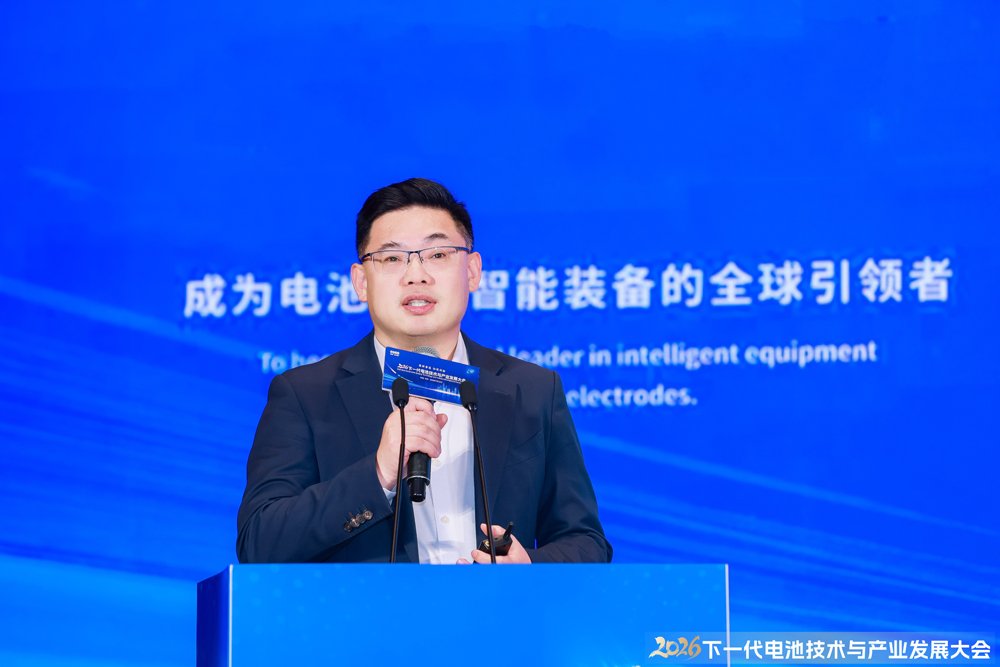
Yang Hongxin, Chairman and CEO of Hikvision Energy Technology Co., Ltd.
On the morning of the 12th, Yang Hongxin, the chairman and CEO of Hikvision Energy Technology Co., Ltd., delivered a keynote speech titled "Evolution and Industrialization Process of Hikvision Energy's Solid-State Technology" at the forum. He shared insights on the battery industry, Hikvision's strategies, the production plan for Hikvision's hybrid solid-liquid batteries, and the breakthroughs in Hikvision's all-solid-state core technologies. Battery Network has selected some of his outstanding viewpoints for readers' enjoyment:
In the context of the rapid evolution of the global energy transition and the terminal application market, the lithium battery industry is advancing along a clear and steadfast path of technological iteration and industrial upgrading.
The liquid and mixed solid-liquid multi-system routes in the battery field have long coexisted.
At the meeting, Yang Hongxin pointed out that currently, in the battery field, the liquid and mixed solid-liquid multi-system routes have coexisted for a long time, and the all-solid-state approach will ultimately prevail in the long run:
Short-term and medium-term liquid batteries remain the absolute mainstream: multiple systems will coexist in the long term. Among them, lithium iron phosphate and lithium cobalt oxide are still the mainstream systems in the next five years. Each takes what it needs to meet the requirements of different scenarios.
Medium-term mixed solid-liquid small-scale infiltration: The mixing of solid and liquid is an important stage in the development of three-dimensional technology. 2026 marks the first year of mass production of mixed solid-liquid technology, and it will be prioritized for use in high-performance scenarios such as low-altitude and high-end passenger vehicles.
Solid-state is the long-term direction: Solid-state still has a long way to go (interfaces, cycles, costs). It is expected to start demonstration vehicle installations in 2027, mass production in high-performance scenarios in 2030, and expand commercialization in other fields by 2035.
This prediction is made from the perspective of market application rather than technological research and development. Different products are evaluated based on various application scenarios such as automobiles and energy storage. "Yang Hongxin stated, "Solid-state batteries are currently receiving much attention, but there is significant disagreement within the industry regarding their production timeline. From achieving full solid-state production this year to achieving large-scale production by 2035, opinions vary. Solid-liquid hybrid batteries and sodium batteries are also current hotspots. Globally, lithium iron phosphate and lithium-ion batteries still dominate the market. The market shares of sodium batteries and mixed solid-liquid batteries are expected to show a significant increase starting from 2026, which represents the biggest structural change. In contrast, the share of full solid-state batteries remains extremely small and they may only gain partial applications in specialized fields."
Lithium iron phosphate consolidates the foundation, while lithium nickel manganese cobalt oxide undergoes comprehensive upgrades and integrates solid and liquid components.
In the face of this situation, Yang Hongxin pointed out that the proportion of different product forms varies in various application fields. The technological routes chosen by enterprises also differ: some focus on mainstream areas such as lithium iron phosphate, ternary, and manganese oxide lithium; some concentrate on sodium batteries; and some are dedicated to solid-state batteries. "No matter which field is focused on, there will be development opportunities in the future."
Hive Energy has set its overall strategic direction as follows: Lithium iron phosphate will form the foundation, while lithium nickel manganese cobalt oxide (LNCO) will be comprehensively upgraded and integrated with solid-liquid hybrid technology.
Specifically, the liquid battery technology has been upgraded. The honeycomb battery will be equipped with 4C fast charging as the standard feature for the subsequent models, and 10C ultra-fast charging for the high-end models. Through the laminated sheet technology and structural innovation, the company will firmly promote the parallel development of lithium iron phosphate and lithium cobalt oxide batteries, and simultaneously implement the strategy of synchronous development of hybrid and pure electric. The performance, safety and cost of lithium iron phosphate and lithium cobalt oxide liquid batteries will be advanced to the global leading level. Based on the accumulated hot composite laminated sheet technology and intelligent manufacturing experience in the current mass production technology, the honeycomb battery will promote the rapid commercialization of hybrid solid-liquid batteries and lay a solid foundation for the research and development of all-solid-state batteries.
Among the several product series of Beihua Energy, including Fortress Battery and Dragon Scale Battery, the company will achieve mass production of hybrid solid-liquid batteries this year. Yang Hongxin emphasized, "Unlike most enterprises that pursue the research and development direction of high energy density, after intense discussions within the company, it was clearly determined that the products we will mass-produce are not the high energy density products with 360–380Wh/kg, but the cylindrical 247Wh~270Wh/kg medium-nickel and high-nickel hybrid solid-liquid batteries. The core goal is not to increase the energy density, but to solve the safety issue."
Yang Hongxin further explained that in the current market, vehicles priced between 300,000 and 400,000 yuan are mainly equipped with long-range extended-range and pure electric powertrains. Among them, the proportion of lithium-ion batteries exceeds 80%. Compared to lithium-iron phosphate batteries, lithium-ion batteries have significant safety risks. Therefore, Hikari Energy chose to enhance safety and fast-charging performance through a hybrid solid-liquid technology without increasing energy density, cost, or modifying the existing production line. This is the core of the company's business logic.
Currently, the high energy density batteries developed by Hikari Energy (with a capacity of 360–380Wh/kg) are still in the development stage. They are mainly targeted at special fields such as low-altitude flights and humanoid robots, rather than automotive applications. For the vehicle-mounted scenario, ensuring the safety guarantee of no spontaneous combustion is the top priority. Hikari Energy, in combination with its self-developed thermal composite stacking technology, is promoting the commercialization of hybrid solid-liquid batteries and simultaneously conducting pre-research on all-solid-state batteries.
The hybrid solid-liquid battery is designed mainly with the goals of enhancing safety and not increasing costs.
Looking ahead to the next two years, Yang Hongxin stated that from a global perspective, Hikari Energy believes that hybrid solid-liquid batteries are not a transitional technology but will become the mainstream technology in the long run. In contrast, all-solid-state batteries will still struggle to achieve cost advantages by 2035 and will have an extremely low market share. Therefore, the company will focus on the hybrid solid-liquid battery field and continue to make efforts.
The initial classification of the mixed solid-liquid technology can be divided into three categories: cathode coating-dissolution mixing technology, gel mixed solid-liquid technology, and mixed solid-liquid coating technology. Among them, the mixed solid-liquid coating is further divided into cathode coating technology and electrolyte separator transfer coating technology during manufacturing.
Among the three major mainstream technical routes, most enterprises choose solid oxide electrolytes. However, Bohai Energy has opted for the electrolyte separator transfer coating technology, specifically using the laminating process. This technology, without altering the existing production line and main processes, directly transfers the solid electrolyte from the separator to the surface of the electrode sheet, with a transfer rate exceeding 95%, thereby achieving an improvement in safety performance.
Yang Hongxin disclosed that Hikari Energy is developing the second-generation hybrid solid-liquid technology. Compared with the first generation, the 2.0 version integrates multiple technological routes: the positive electrode can be doped with oxide electrolytes, and the oxide electrolytes are transferred to the negative electrode at the same time, further enhancing safety. It is expected that the first-generation product, which will be mass-produced in the third quarter of this year, can reduce the probability of extreme thermal runaway failure by approximately 25%; the second-generation product can reduce this probability by approximately 42%. There is no excessive pursuit of energy density, but it can achieve fast charging capabilities of 6C to 8C, meeting the mainstream fast charging requirements of the market.
The above technologies of Beihang Energy have combined the application at the battery pack level - the separation of power sources and the synergy of hybrid solid-liquid technology - to achieve a comprehensive improvement in safety.
The core logic of Hikari Energy in the field of hybrid solid-liquid batteries is: to focus on enhancing safety without increasing costs, and not to pursue short-term improvements in energy density. Yang Hongxin introduced that Hikari Energy combines the innovation of solid-liquid hybrid cell materials with the safety structure of the Dragon Scale 3.0 system to achieve a dual safety barrier from the cell to the entire vehicle. It uses data to define a new height of safety for lithium iron phosphate batteries. The first B sample of the medium-nickel solid-liquid hybrid battery was rolled off the production line in early May 2026 and will be officially mass-produced in the third quarter of 2026.
Make breakthroughs in core technologies and develop samples of 70Ah or larger all-solid-state battery cells by 2030.
All-solid-state batteries have attracted much attention, and Hikari Energy is also actively conducting research and development. According to the type of electrolyte, all-solid-state batteries can be classified into four routes: polymer electrolytes, oxide electrolytes, sulfide electrolytes, and halide electrolytes.
The industry's understanding of it is constantly evolving, with new insights emerging almost every few months. Regarding the technical route, each electrolyte has its own suitable application methods and should not be mechanically used merely as a solid-state electrolyte separator. Yang Hongxin analyzed, "The oxide electrolyte is most suitable for the mixed solid-liquid system and can be widely applied; the halide electrolyte has excellent oxidation stability and can be used as a functional additive to be incorporated into the cathode instead of being used as a separator; the sulfide electrolyte is currently the most mainstream research route. However, tests at the end of last year showed that most sulfide all-solid-state batteries experienced fires or even explosions under extreme conditions such as puncture tests. The mechanism lies in the reaction between free sulfur and oxygen, which triggers a violent combustion reaction. If not handled properly, all-solid-state batteries may be more dangerous than liquid batteries. Therefore, technologies such as halide doping need to be employed to solve this problem."
In Yang Hongxin's view, although the mainstream technology route of solid-state batteries has been widely recognized, there are still many practical problems encountered during the development process, and the issues are far more than just those related to the solid-solid interface.
In terms of cost, according to the forecast, the material and manufacturing costs of all-solid-state batteries will be several times that of the ternary liquid battery cells by 2027. And the ternary liquid battery cells themselves are already more than double the cost of lithium iron phosphate batteries. The cost issue will become the main obstacle for the widespread adoption of all-solid-state batteries.
Secondly, in terms of the solid-solid interface and large-scale manufacturing, especially the insulation sealing edge issue, whether using a positive-below-negative or negative-below-positive structure, it is necessary to form a step on the insulation size design. During the ultra-high pressure pressing of the battery cell, the step area is prone to causing the solid-state electrolyte to be crushed. Currently, to prevent crushing, processes such as gluing, sealing, and insulation are required, which are extremely inefficient. How to solve the efficiency and isostatic pressing issues of insulation sealing edge from an industrial perspective remains a huge challenge.
In response to this, Hikari Energy is actively exploring industrialization solutions. In the traditional production process of all-solid-state batteries, the company has already mass-produced liquid batteries that have adopted the thermal composite lamination process. It plans to replace the isostatic pressing lamination technology with this process, merging four workstations into one process step to improve efficiency and reduce costs. This technology is in the pre-research stage and has a relatively high technical threshold.
In addition, Hikari Energy has formulated a technical roadmap for solid-state batteries and is developing an all-negative-free solid-state battery technology to further reduce costs: The first stage (by the end of 2025) will complete the development of a 20Ah cell system with an energy density of 380Wh/kg; the second stage (by the end of 2027) will complete the development of a full-solid-state battery sample with a capacity greater than 60Ah and an energy density of 400Wh/kg; the third stage (in 2030) will develop a full-solid-state cell sample with a capacity of 70Ah or more, with an energy density exceeding 500Wh/kg.
"Over the past one or two years, the company has begun mass production of several types of square-shaped and pouch-type hybrid solid-liquid batteries for use in vehicles and low-altitude applications. The timeline for fully solid-state batteries has been set for 2030." Finally, Yang Hongxin concluded, "Whether it is hybrid solid-liquid, sodium-ion batteries or fully solid-state batteries, the entire industry is facing significant challenges at the application end, battery factories, material factories, testing ends, and equipment ends. Currently, there is no unified solution, and all parties are still exploring diverse paths. Relying on the large-scale R&D investment from the upstream and downstream in China, we believe that through the joint efforts of the entire industry, significant breakthroughs will surely be achieved in the future."


